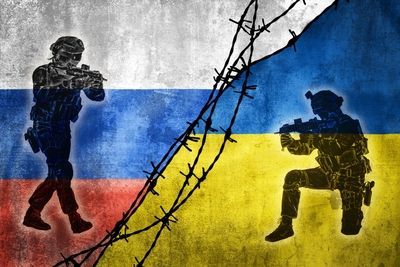
The Kremlin’s main stated reasons include:
- Protection of people in the Donbas region (Donetsk and Luhansk) from alleged “genocide“, “bullying“, and “abuse” by the Ukrainian government. Russia claimed that Russian-speaking populations there had suffered for eight years (referring to the conflict that began in 2014). Putin invoked this as a humanitarian necessity and a form of collective self-defense, citing requests for help from the self-proclaimed Donetsk and Luhansk People’s Republics (which Russia recognized as independent states just days before the invasion).
- “Demilitarization” of Ukraine — reducing or eliminating its military capabilities so it could no longer pose a perceived threat to Russia.
- “Denazification” of Ukraine — eliminating what Russia described as neo-Nazi influence in the Ukrainian government, military, and society. Putin and Russian officials have repeatedly labeled the Ukrainian leadership and state structures as controlled by or tolerant of “neo-Nazis”, drawing parallels to World War II-era history to frame the operation as a moral imperative.
- Preventing NATO threats to Russia’s security. Putin argued that NATO expansion eastward, potential Ukrainian membership in the alliance, and Western military infrastructure near Russian borders created an existential danger, violating earlier alleged understandings about NATO’s non-expansion.
Putin explicitly invoked Article 51 of the UN Charter (self-defense) in his speech, framing the action as defensive rather than aggressive.
These justifications have remained broadly consistent in Russian official rhetoric since 2022, though emphasis has shifted at times (e.g., more focus on protecting “historical Russian lands” or portraying Ukraine as an “artificial state” in later statements).
These claims have been widely rejected internationally as baseless pretexts for an unprovoked war of aggression. Independent observers, governments, international organizations, and fact-checkers have found no evidence supporting allegations of genocide in Donbas or a neo-Nazi-controlled Ukrainian state (Ukraine’s president is Jewish, and far-right elements exist but hold minimal political power).
The invasion is classified by most of the international community as a violation of international law.