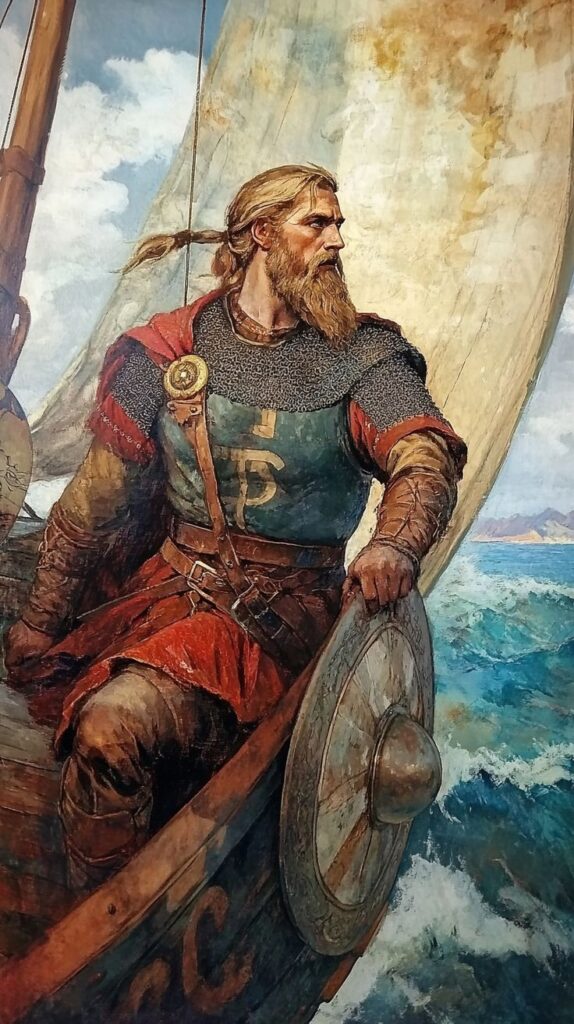
The Old Norse people and their Vikings were more than just fierce warriors and explorers—they lived by a code of honor, courage, and resilience that shaped their society. These Old Norse values weren’t just about survival; they were about living with purpose, strength, and dignity.
I am Icelandic and I am 53 years old and I grew up on the stories and values all my life. The Old Norse language and Icelandic are almost the same, and we Icelanders (which you call Norse in this context) use all the old words and expressions as they did in the Viking age. I can assure you that I know what I am talking about.
In today’s world, where young men in the west often face confusion about identity, purpose, and masculinity, these ancient principles still hold power.
Let me break down the key virtues of the Old Norse men and how you can apply them for your self growth in the modern age.
1. Courage (Hugur)
The Vikings didn’t just value physical bravery—they respected the mental fortitude to face fear and adversity. Whether in battle, exploration, or personal struggles, a man was expected to stand firm and fight, and go down with a fight.
Modern Application:
i) Face challenges head-on, whether in your career, relationships, or personal growth. Nothing comes without effort.
ii) Speak your mind with confidence, even when it’s unpopular. If you know you are right, go against the crowd.
iii) Embrace discomfort—growth happens outside your comfort zone. Reject comfort.
2. Honor (Drengskapur)
A man’s word was his bond. Dishonesty, cowardice, and betrayal were seen as marks of weakness. True honor came from keeping promises, protecting your kin, and acting with integrity.
Modern Application:
i) Be a man of your word—follow through on commitments.
ii) Stand up for what’s right, even when no one is watching.
iii) Treat others with respect if they deserve it, but never tolerate disrespect from others.
3. Self-Reliance (Sjálfstæði)
The Norse admired those who could depend on themselves—hunters, warriors, and craftsmen who needed no handouts. A real man took responsibility for his own life.
Modern Application:
i) Learn all the practical skills you need in life to be self reliant (fitness, cooking, fixing things).
ii) Take ownership of your mistakes—no excuses, no blaming others. Mistakes are a part of life and learning.
iii) Build independence rather than expecting others to solve your problems.
4. Strength (Styrkur)
Strength wasn’t just physical—it was mental and emotional. A weak mind was just as dangerous as a weak body.
Modern Application:
i) Train your body—physical fitness builds discipline.
ii) Develop mental resilience—read, meditate, learn to take criticism, challenge yourself.
iii) Control your emotions—anger and impulsiveness are weaknesses. Try not to react emotionally to all things. Crying is never allowed in the face of danger and hardship, because it serves no purpose and will not help the situation. Crying is perfectly allowed in times of a death of a family member, lover or friend – but after the burial it must end.
5. Loyalty (Tryggð)
A Norse man’s loyalty to his family, friends, and chieftain was unbreakable. Betrayal was the ultimate disgrace.
Modern Application:
i) Stand by your family and true friends.
ii) Be dependable—people must be able to trust you to help the, or follow through on your word.
iii) Avoid gossip and backstabbing—true men don’t play those games.
6. Perseverance (Þrautseigja)
Norse people and their Vikings endured harsh winters, long voyages, and brutal battles. They didn’t quit—they adapted and overcame.
Modern Application:
i) Push through hardships – success comes to those who persist. A safe space is the worst thing for you.
ii) Learn from failure – every setback is a lesson. All success comes from repetition of action, which is why training and learning is important. The more you repeat the training, the fewer failures you will get.
iii) Stay disciplined always – greatness isn’t built in a day. Discipline and consistency are a mans best friend over his lifetime.
7. Wisdom (Speki)
Odin himself sought knowledge relentlessly. The Norse respected men who could think, strategize, and speak wisely.
Modern Application:
i) Read books—history, philosophy, poetry and skills that matter.
I want to stress the aspect of poetry for all men. Many of the best Vikings and Berserkers were famous poets (like the Viking Egill Skallagrímsson, that wrote the poem “Höfulausn” to the King of Norway to escape a death sentence, and he wrote the poem “Sonatorrek” about how felt about the death of his son) that expressed themselves through poetry. The same trend is found with many of the famous Samurai warriors, which were also great poets. The fact that us men do not feel comfortable expressing how we feel about personal matters, or try not to give much thought into such things does not change the fact that we also strong feelings of love and loss, and everything in between. We just suppress them because we don’t find them useful in real life situations, but the fact is that our feelings don’t go away, they just slide into our subconscious and marinade there for years and decades, and we often drown them out with alcohol. What I am trying to say, is that for over 2000 years men have used poetry and an outlet to express themselves. It is mostly a personal thing and you don’t have to publish for the public, but keep in a journal for yourself and maybe leave them your children to read after your death.
ii) Seek mentors—learn from those who’ve walked the path.
iii) Think before you act—impulse leads to regret.
8. Final Thoughts
The Old Norse didn’t have it easy they lived in a brutal world that demanded strength, honor, and resilience. But these values made them legendary.
Today’s world may be different, but the core principles remain.
Young men today need courage, discipline, and purpose more than ever.
Embrace these Viking virtues, and you’ll stand tall in an age of weakness.