The Norse men understood the nature of women in ways modern society has forgotten.
Norse sagas and poetry reveal deep truths about women’s nature and femininity, not as weakness necessarily, but as a sometimes as a force to be managed.
The Sagas tell epic tales of families and feuds, where women, mothers and grandmothers have major influence on the events of history, sometimes for the better and sometimes for the worse. Their love, motherly protection, pride of self or pride of family, often times shaped the destiny of their husbands and other family members.
Women then as now, are fickle in love and commitment towards their husbands or children, as the Hávamál (Sayings of the High One) warns:
“No man should trust the words of a girl, nor a woman’s vows, for their hearts were shaped on a turning wheel.”
This wasn’t misogyny, it was realism. The Norse saw women as complex and sometimes dangerous. Let’s explore their wisdom.
1. The Norse view of women
The Norse had realistic views on women and men, meaning that they were both good and bad, and everything in between. It all depended on the person and their personality.
1.1. Women as Weavers of Fate in Norse mythology
In Norse mythology, the Norns (female beings, plural) controlled destiny itself. In Iceland today, the word “Norn” is used about a female witch still to this day.
Key texts that talk about this are:
-
The Poetic Edda (The original Norse wisdom, describing the Norns (e. Witches) and their ways)
-
The Saga of the Volsungs (Women are described as schemers and saviors)
Like them, mortal women shaped lives through manipulation, witchcraft, or seduction. Some women were good and some were bad.
Tension between women, perceived insults and hurt pride, could often have severe consequences for the husbands and family. Men were always aware of this trait and dealt with women accordingly. This knowledge has been somewhat lost on the modern man, mostly due to the influence of feminism of the past 50 years.
1.2. Love was a pursuit as always
Norse romances were battles of wills. A woman’s favor had to be earned—often through trials of strength, wit, or persistence.
It was true then and it is true now. A man must be worthy of a good woman, he must have a plan in life, must lead the way forward for himself and others, be honorable and fearless in asserting himself amongst other people. He should be fair and kind to his woman, and his children. The woman should make an effort to be a good woman, with virtue, kindness, feminine and be able to show love and appreciation for her man.
An example is found in the saga of Sigrdrífumál, the Valkyrie Sigrdrífa tests Sigurd with riddles before sharing divine wisdom.
Modern Equivalent might be:
-
The Way of the Superior Man (David Deida’s take on polarity, which is a very interesting read)
1.3. Strong under threat, not damsels in distress
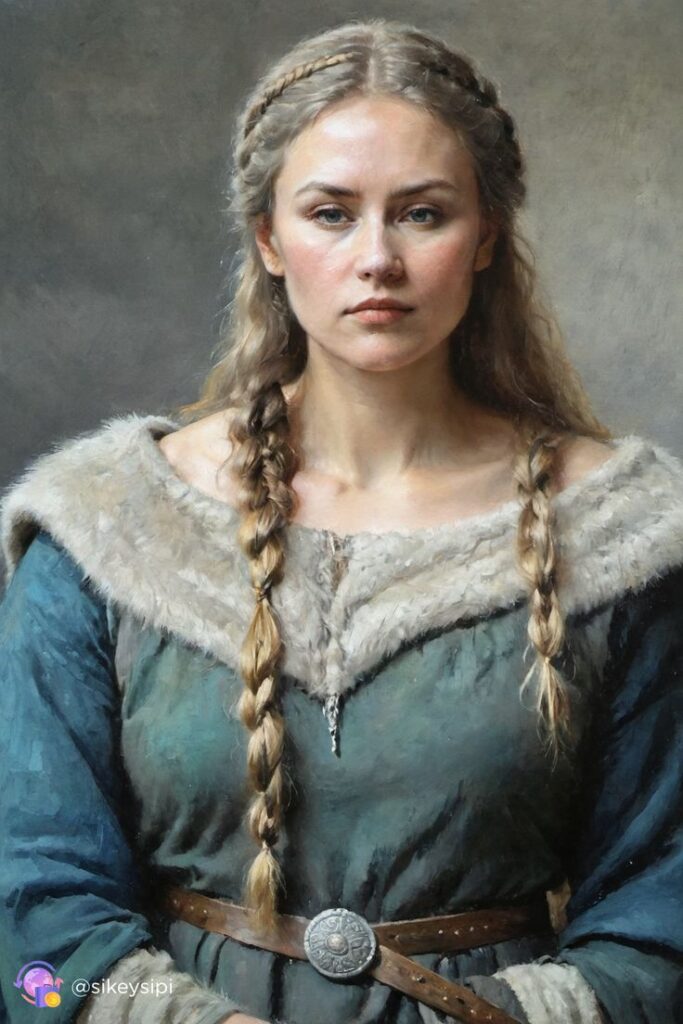
Norse sagas feature strong and independent women. They are strong minded, but caring about their family and honor. They governed the homes and families, through influence over their men. Men took heed of their wives and matriarchs of the families, because they loved them and knew that they had the best intension for all the members of the familiy. Many of them are famous even today, like:
-
Freydís Eiríksdóttir (the daughter of Erik the Red, and sister of Leif Erikson, who when pregnant scared off native American attackers with a sword)
-
Lagertha (shieldmaiden who fought beside Ragnar Lothbrók)
-
Gudrun Osvifursdottir (who in Laxdæla Saga avenged her family through blood and fire)
These weren’t passive princesses—they were strategists and sometimes behaved like warriors, gaining respect on their own accord.
Viking Jewelry for the Modern Valkyrie:
-
Valknut Necklace fit for a Queen (Symbol of Odin’s power)
-
Viking Jewelry Sterling Silver Mjolnir/Valknut/Raven Necklace (Worn by Norse noblewomen)
2. Norse Warnings About Women
The Norse men were aware of women’s nature and didn’t romanticize it. The is an old Viking proverb which says: “Konur eru konum verstar“, which basically means that women are their worst enemy. Why? … because they betray one another, are often jealous of one another and basically have the tendency to destroy each other and their friendships. It’s not because they are evil or means, it’s just their nature and they can’t control it for the most part.
2.1. Beauty With a Blade
The Norse Hávamál cautions that attraction may be used as a trap: “A woman’s words hide daggers; her kisses brew poison.”. This has always been true and everyone should not mix attractive people with goodness or being wise.
2.2. Choose Wisely
When it came to Norse men choosing a woman, the nature of men was to go after the looks. A Viking proverb says: “A man who picks a wife by her looks alone, wakes up married to a fool.”. Men were then are are now very visual creatures. As men we need to look deeper than the superficial looks.
3. Modern Lessons From Norse Wisdom
3.1. Women Test Men
Viking women challenged suitors with tasks. Today’s tests are subtler, and pertain more to emotional resilience, ambition, leadership.
The way to pass in to:
-
Be unshakable, cast all self doubt aside.
-
Provide leadership on what is next, when to start , how you see the future of the family or the relationship. You must provide the vision, the ideas, the plan and she will follow you, if you know what you are doing.
-
Protect your people, protect her from outside danger and herself (physically and emotionally).
3.2. Legacy Matters Most
Vikings didn’t fear death, they feared being forgotten.
A woman’s role was bear strong children and guard their heritage, and keep the family together during the hard times, along her husband and other family members.
4. Final Thoughts
The Norse didn’t “simp” or “dominate.” They understood women’s nature, fierce, wise, and unpredictable. Women are great individuals but sometimes the men needed to save the women from themselves and their pride.
A.G. Munson